By Ps Dev Menon
A couple of days ago I was sitting amidst several tables of religious leaders from various other faith groups in Singapore. It was a dinner organised by our neighbour, the Harmony Centre, to celebrate their 20th Anniversary (you may have read about it on the news).
This wasn’t the ‘seasoned’ table of those who regularly attended such things like Ps Zhiwen or Ps David Wong (as BPCIS GenSec) – but mostly ‘newbies’. So naturally we were curious and enquired about each other’s religious practices.
It dawned on me that most only have ‘services’ that worshippers (usually not even the same people) attend from time to time. But Christianity was one of the few that had a designated and regular faith community – this thing we call ‘church’.
Indeed church is one of the greatest gifts given to us by our Father in heaven, established through the conquering work of our Lord Jesus Christ. A real means of grace where we can speak God’s Word to one another, share tangible expressions of God’s love, and remind one another of our Spirit-guaranteed inheritance.
Most of us who grow up in church don’t realise this privilege – perhaps we only focus on the problems. And perhaps there are leaders who instead of offering it as a means of grace make it more of a work-based thing or even a guilt-trip. And of course there are many of us who have been hurt by individuals in church (actually, it’s probably all of us).
Nevertheless, like our flesh-family (or better than the flesh-family I should say), it is a real blessing given to us and we don’t thank God enough for it or leverage it for all its worth.
As one of my favourite authors, Dietrich Bonhoeffer once said:
“If we do not thank God daily for the Christian fellowship in which we have been placed, even where there is no great experience, no discoverable riches, but much weakness, small faith, and difficulty; if on the contrary we only keep complaining to God that everything is so paltry and petty… then we hinder God from letting our fellowship grow.”
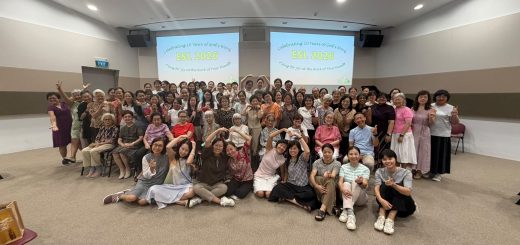
May we ponder this as we approach our ZB 32nd Anniversary on 31st Oct 4.30pm.
Don’t forget to sign up! It will be a simple service with songs, testimonies and prayer. A simple buffet dinner will be served outside at the fellowship hall (free seating only!).